In a nutshell
- 🌬️ Master timing and airflow: keep windows closed during peak heat, perform a nightly cross-ventilation purge, leverage the stack effect, and use fans to eject hot air.
- 🪟 Block solar gain with blackout blinds, double curtains and reflective film; favour light colours and breathable linen to cut radiant heat.
- 🥤 Practise micro-cooling: steady hydration, chilled mists, cold foot baths, and low-heat cooking—cool the person, not the whole flat, for energy-saving comfort.
- 🌿 Apply design tweaks: build or fake thermal mass, use plants for shade and evapotranspiration, and deploy extractors strategically to dump heat fast.
- 🛏️ Create a sanctuary room: a north-facing, shaded, breathable space you seal by day and open at night—anchoring a reliable night purge for better sleep.
Britain’s summers are edging into unfamiliar territory. Trains slow, pavements shimmer, and the hum of emergency desk fans becomes a soundtrack. Meanwhile, in Sweden, domestic life has long been organised around keeping interiors comfortable without flicking on a compressor. That’s not nostalgia; it’s design, ritual and restraint. The Swedish method blends passive cooling, thoughtful materials and a pragmatic daily rhythm. It’s frugal. It’s elegant. It works. Here’s how to borrow that cool-headed playbook, trim your energy bills, and turn a sweltering flat into a sanctuary—no air conditioning required. Think less of fighting heat and more of outsmarting it, hour by predictable hour.
Cool the Swedish Way: Ventilation, Rhythm, and Restraint
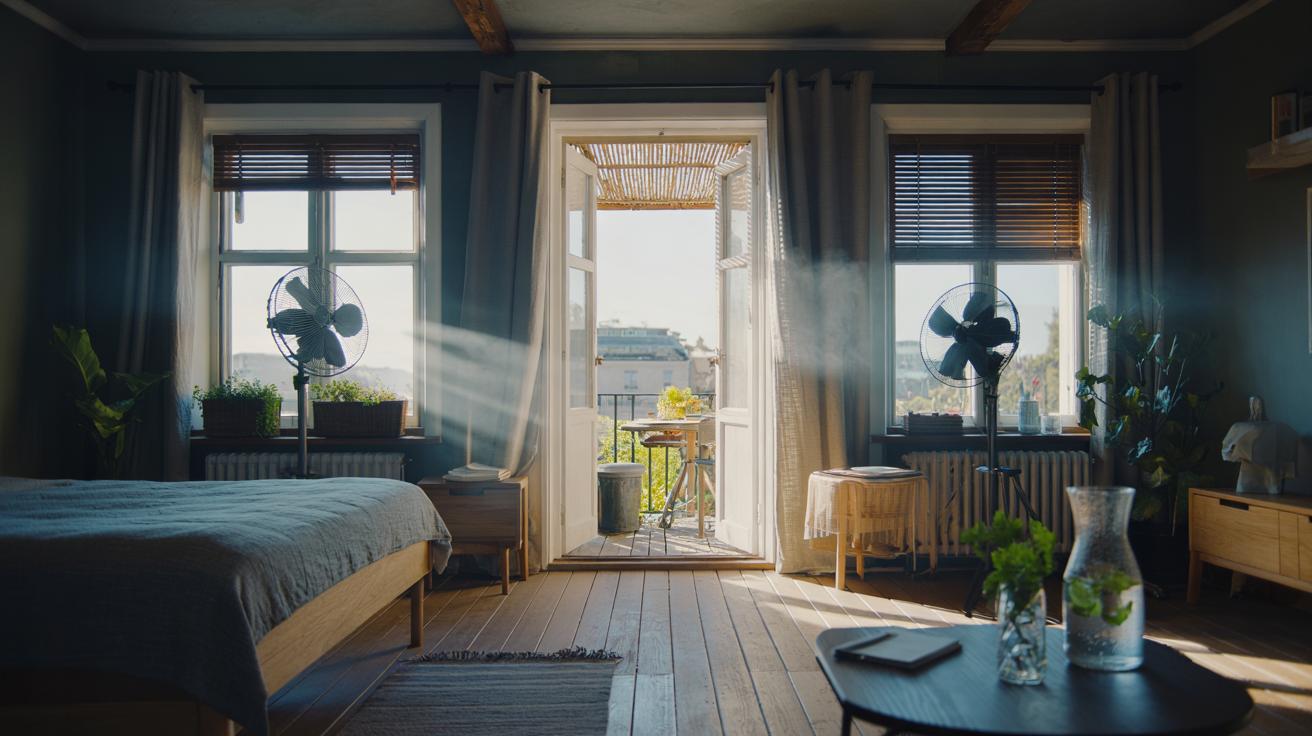
Start with timing. Keep windows and trickle vents closed during peak heat (roughly 11:00–19:00), then perform a nightly purge: wide-open windows for 20–40 minutes once outdoor air drops below indoor levels. That’s classic Swedish cross-ventilation—known locally as a “korsdrag”—which pairs a cool intake with a warm exhaust. Place a fan facing outward in the hottest window. You’re not blowing at yourself; you’re ejecting stale heat. Another fan, angled inward on the shaded side, completes the loop. Create a deliberate current, not a random breeze.
Exploit the stack effect. Hot air rises, so crack high windows or loft hatches at night and lower-level windows too, letting buoyant heat escape while denser cool air spills in. During the day, close doors to sun-facing rooms and seal gaps with draught excluders to stop heat creeping further inside. Dampen heat sources: pause the tumble dryer, shift oven use to late evening, switch to LEDs. A light mist on curtains before the night purge adds a touch of evaporative cooling. Keep it gentle; you’re nudging physics, not recreating a rainforest.
The golden rule is simple: trap the cool you gain at night, and refuse entry to daytime heat. That discipline—heat out, cool in—delivers steadier comfort than chasing temporary blasts of air. It’s a rhythm. Treat it like a summer routine.
Shading, Textiles, and the Power of Light
Swedish homes lean on shade. Exterior solutions work best, but even inside, light makes a decisive difference. Fit blackout blinds or pale roller shades with a reflective backing (Swedes love rullgardiner). Keep them fully down on sunward windows by mid-morning. Add neutral, tightly woven curtains to trap a sun-heated air layer at the glass—close enough to act, not so close they touch condensation points. Light colours reflect heat; dark colours invite it in. Rugs and textiles matter too: airy linen on beds, crisp cotton throws, zero velvet, minimal pile. Think breathable, quick-drying, summer-friendly.
On balconies or terraces, use reed screens or light canopies to shade glass without smothering airflow. Indoors, park reflective items—TVs, framed glass—out of direct sun; they bounce radiant heat deeper into the room. Consider removable window film on south and west panes if alterations are allowed. It won’t perform like an external shutter, but you’ll feel the drop. And never forget the lamp audit: replace halogens with LEDs and switch off idle kit. Heat sneaks in by wire as well as window.
| Technique | Why It Works | When To Use | Quick Tip |
|---|---|---|---|
| Blackout blinds | Blocks solar gain | Late morning to sunset | Close by 10:30 on clear days |
| Double curtains | Traps hot air at glass | All day on sun side | Keep a 2–5 cm air gap |
| Reflective film | Reflects infrared | South/west windows | Check landlord rules first |
| Linen bedding | Breathes, wicks sweat | Nights above 20°C | Pair with a light cotton sheet |
A shaded room starts cooler and stays cooler, which means less purging at night and a calmer thermal curve. That steadiness is the Swedish superpower.
Hydration, Food, and Micro-Cooling Rituals
Comfort isn’t only architectural; it’s behavioural. Swedes pace summer days with small acts of svalka—cool relief. Drink regularly, aiming for roughly 2–3 litres of water across the day, more if you’re active. Add a pinch of salt and citrus to one bottle to replace what you sweat. Brew mint or camomile, then chill; paradoxically, a warm tea can also trigger a sweat response that cools you later. Little and often beats heroic gulps when the air feels heavy.
Cook cool. Batch-cook grains at night, keep the hob off at midday, assemble salads and open sandwiches—very Scandinavian, very effective. For targeted cooling, keep a spray bottle in the fridge and mist wrists, neck and behind knees. A five-minute cold foot bath drops your core perception of heat with remarkable speed. Sleep tricks? Freeze a water bottle, wrap it in a tea towel, and tuck near the feet. Rinse sheets in cool water, spin hard, make the bed slightly damp in heatwaves; a fan will finish the job quickly without drenching.
Micro-cooling is surgical: cool the person, not the whole flat. That’s the essence of lagom—just enough. It saves energy, lowers stress, and teaches your body a calmer response to heat.
Design Tweaks for Flats and Terraces
Think about thermal mass. Heavy materials absorb cool air at night and release it gently by day. If your home is lightweight, fake it: store chilled thermal packs or water-filled bottles in a shaded corner overnight and return them to the “cool room” by day. Seal south-facing rooms in the afternoon; open the home like a corridor only when outside air wins the temperature race. Use the bathroom extractor to dump hot air in short bursts—door ajar, window cracked—to turbocharge the purge without inviting street noise for hours.
Greenery helps. A couple of broad-leaf plants by the window create dappled shade and a whisper of evapotranspiration. On balconies, angled screens or tall planters break harsh sun without killing breeze. If allowed, add pale, breathable blinds on the outside of frames for a real Swedish edge. Indoors, shift heat-making kit—routers, chargers—off the bedroom shelf. Small watts, big difference at 2am. Design for the hottest hour, not the average day.
Finally, select a sanctuary. One room, northern aspect if possible, stripped of clutter, lights minimal, fabrics breathable. Make that your evening retreat when the mercury spikes. Close it up by late morning. Open it wide at night. That predictable choreography keeps sleep viable when forecasts wobble into the thirties.
Heat resilience is a habit as much as a hardware upgrade. Sweden’s quiet lesson is to orchestrate light, air and routine so they work with you, not against you. Shade early, vent late, cool yourself precisely, and let materials carry the load in between. It’s a humane way to ride out hot spells without trading money for noise and carbon. As the next warm front looms, which of these Swedish-inspired tactics will you try first, and how will you adapt them to the quirks of your own home?
Did you like it?4.5/5 (24)