In a nutshell
- 🪟 The curtain trick creates a sealed thermal barrier by adding a pelmet, side seals and a weighted hem, breaking the hidden convection “curtain chimney” that steals warmth.
- 🛠️ Step-by-step: fit a 10–20 cm pelmet/shelf, use magnetic or hook‑and‑loop side seals, add hem weights and a sill draught excluder; renters can use tension rods and removable strips.
- 💷 Savings: expect 5–15% lower heating demand on draughty windows; materials cost £35–£90 per window with estimated £40–£120/year savings and potential one‑winter payback, boosted by radiator reflector foil.
- ⏰ Smart habits: close at dusk, open after sunrise; keep fabric clear of radiators, use a shelf to throw heat forward, and comfortably run rooms at 18–19°C.
- 💧 Moisture control: manage condensation with brief morning ventilation and breathable linings; pair with low‑cost draught-proofing (letterbox brush, keyhole cover) for warmer rooms and lower bills.
Britain’s winter ritual is familiar: the thermostat creeps up, bills follow, and a faint draught slides off the glass. There’s a fix hiding in plain sight. The ingenious “curtain trick” turns ordinary drapes into a sealed thermal barrier that slashes heat loss without ripping out windows or buying a new boiler. It relies on a simple change in airflow, not expensive tech. Block the hidden chimney behind your curtains and you block the heat leak. The result? Rooms feel warmer at lower settings, radiators don’t work as hard, and evenings are suddenly snug. Here’s how it works, how to do it, and why it can save you hundreds.
What Is the Curtain Trick and Why It Works
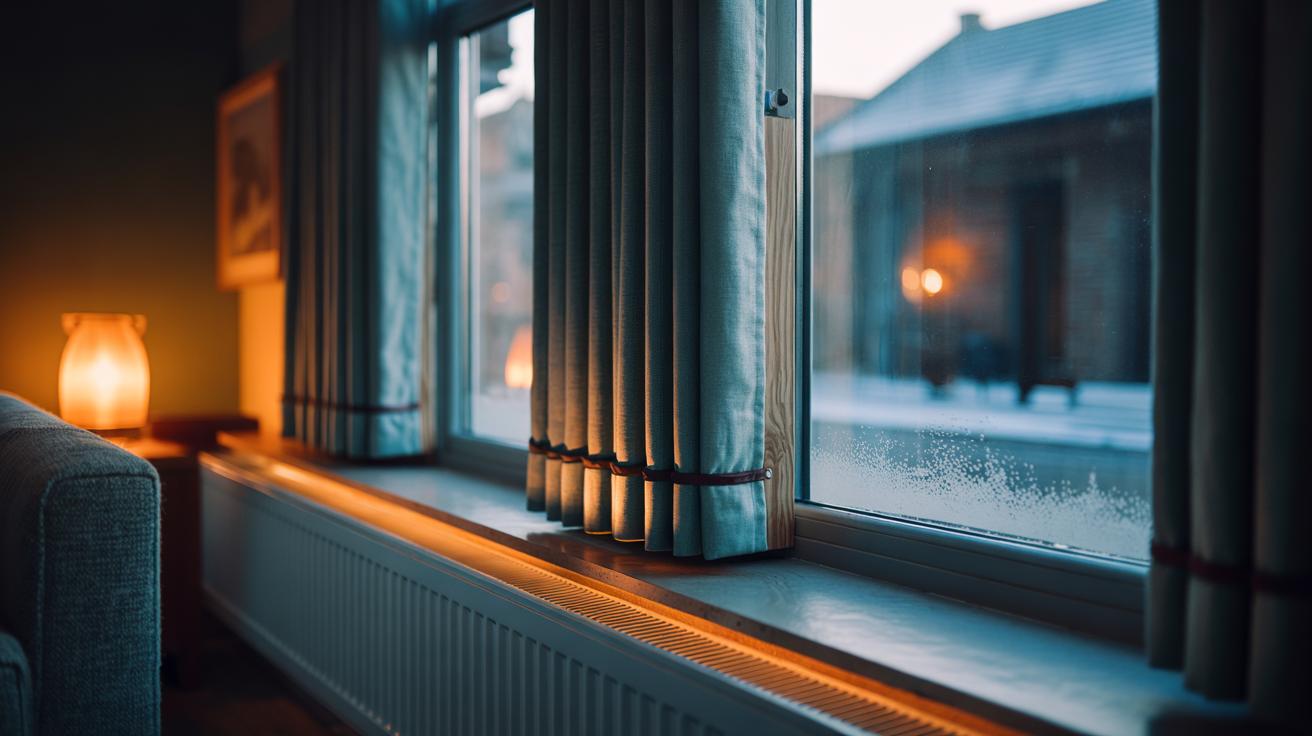
Windows are the weakest link in most homes. Even double glazing has a higher U‑value than insulated walls, which means faster heat loss. When curtains hang from an open rail, warm air rises from radiators, dives behind the fabric, cools against the glass, and sinks to the floor. That loop is a hidden convection current—a heat drain you can’t see. The curtain trick breaks that loop. Add a simple pelmet or shelf above the rail, lightly seal the curtain edges to the wall or frame, and weight the hem. The curtain becomes a controlled, still-air layer rather than a flapping tunnel.
Stop the upward pathway and you stop the draught cycle. A pelmet prevents warm air from spilling over into the gap. Magnetic or hook-and-loop strips along the sides keep the fabric kissing the reveal. A weighted hem reduces billowing when doors open. Optional reflective or thermal lining slows heat transfer further, bouncing radiant warmth back into the room. Combine those elements and you’ve effectively built a low-cost secondary glazing system—one that you can open every morning and that looks like a tidy, deliberate design choice.
Step-by-Step: Build a Sealed Thermal Curtain
Measure first. You’ll want your curtain to sit slightly wider and longer than the window reveal; coverage matters. Fit a modest pelmet or a simple timber shelf (10–20 cm deep) above the pole or track, with brackets that don’t block curtain movement. If drilling is tricky, a lightweight MDF pelmet fixed to the wall with strong adhesive strips can work. The goal is a lid: no easy path for warm air to shoot behind the fabric.
Next, create side seals. Run discreet magnetic tape or hook-and-loop along the wall or window trim, and the matching strip along the curtain edges. Press to close at dusk. Add a small chain or stitched weights to the hem so it hangs true. On deep sills, lay a soft draught excluder against the bottom edge at night to complete the envelope. Consider iron-on thermal lining or a separate interlining if your fabric is thin; reflective foil-backed lining helps in rooms with radiators beneath the window.
Renting? Use tension rods inside the reveal with a light pelmet panel above, fixed via removable strips. Choose reusable adhesives for side seals. None of this requires structural changes or a tradesperson. Close everything at dusk, open in the morning to vent moisture and enjoy passive solar gain. Cheap. Fast. Effective.
Costs, Savings, and Payback in a Typical UK Home
Energy is pricey because heat escapes easily. Stopping the curtain chimney can reduce window-related losses by a meaningful margin, especially on large single-glazed panes, bay windows, or draughty frames. A mid-terrace with 6–10 m² of glazing might save 5–15% of heating demand when the trick is paired with sensible routines—closing at dusk, opening at dawn—depending on insulation and infiltration. With gas around the mid‑pence per kWh and electricity higher, the pounds add up across a long season. Small materials, big leverage. Below is a typical DIY tally.
| Item | Typical Cost (GBP) | Lifespan | Estimated Annual Saving |
|---|---|---|---|
| Timber/MDF Pelmet or Shelf | £20–£45 | 5–10 years | — |
| Magnetic or Hook-and-Loop Strips | £8–£15 | 3–5 years | — |
| Hem Weights / Chain | £6–£12 | 10+ years | — |
| Thermal / Reflective Lining (optional) | £15–£35 | 5–10 years | — |
| DIY Total (per window) | £35–£90 | — | £40–£120/yr |
On a cold-facing sitting room, that can mean a one-winter payback, then clear savings. Assumptions vary: house type, thermostat habits, glazing, and local weather. Add radiator reflector foil behind rads under windows to amplify gains. It’s the combination—air seal plus radiant control—that moves the dial.
Smart Habits to Maximise the Trick
Timing is everything. Close sealed curtains at dusk, open them after sunrise. That traps warmth when temperatures plunge, then harvests free solar heat by day. Keep fabrics behind the radiator line, not draped over. If a radiator sits under the window, use a shallow shelf to kick warm air out into the room and fit reflector foil behind the radiator to push heat back. Check for gaps at the sides each night; a two-second press on the magnets can kill a nagging draught.
Manage moisture. Still air near cold glass can invite condensation. Crack a top window vent for ten minutes each morning, or open the set slightly while the room is warming. Choose breathable linings where possible and keep sills clear. Pair the trick with cheap wins: letterbox brush, keyhole cover, silicone seals on trickle vents that rattle, and a rolled towel against the door gap in severe snaps. Run the thermostat a notch lower; many households report the room feels comfortable at 18–19°C once the draught cycle is gone. Comfort rises, bills fall.
Done well, this humble tweak turns your curtains into quiet workhorses, carving pounds off bills while reclaiming that cosy, lived‑in warmth we crave through a British winter. The materials are modest, the method repeatable, and the comfort payoff immediate. The secret is airflow control, not buying more heat. Ready to try it on your coldest window first, measure the difference with your hands, and see how much your meter slows when you seal the nightly curtain chimney?
Did you like it?4.8/5 (21)