In a nutshell
- 🧅 Onion skins act as a flavour amplifier, adding mellow sweetness, toastiness, and rich colour to broths while balancing sharp edges.
- 🧪 Packed with quercetin, anthocyanins, and minerals, skins deliver antioxidant benefits and a subtle nutrient boost; a touch of acid aids extraction.
- 🍲 Chef techniques: keep a peel jar, use 1–2 handfuls per 2L stock, start in cold water, simmer 45–90 minutes, then strain well to avoid bitterness.
- 🔥 For deeper nuance, dry-toast skins before simmering; pair with mushrooms and kombu for vegetarian umami or with chicken, carrot ends, and celery for golden soup.
- ♻️ Safety and economy: choose unwaxed, clean skins, store dry or frozen, and turn waste into value—try tinted rice or onion skin salt for finishes.
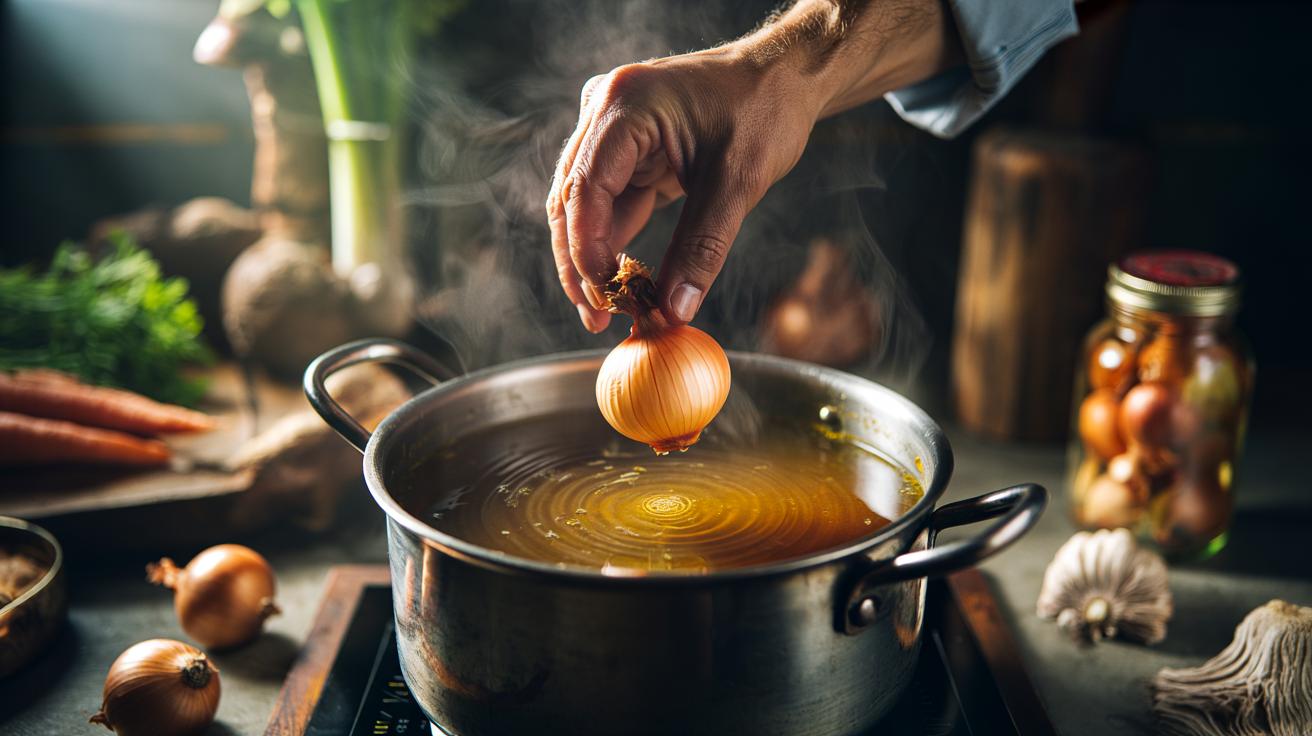
Chefs have a quiet secret for deeper, richer stock: onion skins. Those papery layers we usually bin are a flavour amplifier, lending broths a mellow sweetness, warm colour, and a whisper of toastiness. They cost nothing. They waste nothing. Yet, in the pot, they behave like a spice, reining in sharp edges while adding breadth. Used judiciously, a handful of clean skins can transform a simple soup into something restaurant-worthy. Home cooks in Britain and beyond are catching on, saving peels in jars and freezer bags, then releasing their gifts during a gentle simmer.
Why Onion Skins Supercharge Broth Flavor
Onion skins pack an unexpected punch. Their outer layers hold concentrated flavonoids and aromatic compounds that survive storage better than the juicy flesh. When simmered, they trade a raw, pungent bite for a rounded, umami-adjacent depth. Think malt and tea. Think subtle tannin. In beef stock, that translates to bass notes that feel aged. In vegetable broth, it reads as complexity without heaviness. The alchemy is simple: time, water, and just enough heat to coax out pigment and perfume without tipping into bitterness.
Technique matters. Drop skins into cold water and bring to a simmer with bones or veg; heat unlocks aroma gradually. Roasting the peels first—five to eight minutes in a hot pan or oven—adds a toasty dimension, especially welcome in mushroom or barley soups. Salt gently; the skins concentrate perceived savouriness, so restraint prevents a heavy hand. For clarity, strain through a fine sieve or muslin to catch flecks, leaving a gleaming, amber broth that tastes like it’s been tended for hours.
What’s Inside the Skins: Nutrients and Colour
Beyond flavour, onion skins bring a clever nutritional twist. They’re rich in quercetin glycosides and allied polyphenols, which lend antioxidant activity, and they carry small amounts of minerals such as potassium and manganese. Red onion skins contribute anthocyanins, nudging broth toward a rosy hue, while brown skins offer warm golds from other pigments. Extraction varies: some compounds are more water-friendly after a long, gentle simmer; others bloom when a little acidity is present. A teaspoon of cider vinegar helps draw minerals without announcing itself on the palate.
| Component | What It Adds | Extraction Tip |
|---|---|---|
| Quercetin glycosides | Antioxidant support; subtle bitterness balancing sweetness | Simmer 45–90 minutes; avoid rolling boil |
| Anthocyanins (red skins) | Colour and gentle fruit-like roundness | Low-acid, low-heat to preserve colour |
| Sulfur compounds | Savoury backbone, aroma complexity | Start cold; gradual heating prevents harshness |
| Minerals (K, Mg) | Micronutrient boost | Pinch of acid aids release |
Clean, food-grade skins are edible and safe to simmer. The quantity is small; you’re steeping, not eating them whole, but the infusion is tangible. It’s a thrifty way to nudge nutrition without resorting to supplements, keeping the pleasure of cooking front and centre.
Chef Techniques: From Peel Jar to Pot
Professionals make it easy to repeat. Keep a dedicated peel jar by the chopping board or a freezer bag labelled “onion skins”. Include shallot and leek greens for a choir of allium notes. Once you’ve saved two to three handfuls, you’re set. Ratio matters: for 2 litres of stock, use one generous handful for a subtle lift, two for a pronounced effect. A little goes a long way—start light and adjust next time. Too many skins can drift into tannic territory, like an over-steeped tea.
Blanch or rinse the peels to remove dust, then choose a path: dry-toast in a skillet until fragrant for nutty undertones, or drop them straight into the stockpot for a cleaner profile. Add early in the cook to integrate flavour; remove after 45–90 minutes to avoid bitterness. For a vegetarian ramen, pair toasted skins with dried mushrooms and kombu for layered umami. For chicken soup, include carrot ends and celery tops; the skins will paint the broth a burnished gold. Finish with a splash of acidity to brighten, then strain well for polish.
Safety, Sourcing, and Kitchen Economy
Quality in, quality out. Choose unwaxed onions when possible, especially if the skins look glossy or dusty; UK supermarkets usually label waxed produce. Wash onions before peeling, discarding any mouldy or damp skins. Organic or locally grown bulbs are a safe bet for frequent use. If you’re sensitive to alliums or following a low-FODMAP plan, keep portions modest and test tolerance. When in doubt, strain meticulously and dilute; the flavour remains while the load lightens.
This habit is also good economics. You turn waste into value, trimming costs while lifting flavour. It’s sustainability you can taste. Chefs love the reliability: consistent colour, reliable savouriness, and no extra spend. Store dry skins in an airtight tin for a week, or freeze for months without issue. Beyond broth, try steeping a small batch to tint grains like rice, or to make an onion skin salt—blend the dried, toasted infusion granules with flaky salt for finishing steaks and roasted squash. Small trick, big return.
In an era of mindful cooking, onion skins earn their spot on the counter: a zero-cost, high-impact tool that deepens soup without masking its character. The method is forgiving. The results are visible, even photogenic. And the flavour feels like care. Next time you peel onions for a stew or roast, save those skins and let them work for you. What dish in your repertoire could use that quiet, bronzed depth—beef pho, mushroom barley, or a simple vegetable potage begging for a touch of glow?
Did you like it?4.5/5 (26)