In a nutshell
- 🟡 The tennis ball trick is a low-cost, low-tech form of positional therapy that discourages back sleeping, easing snoring and mild obstructive sleep apnoea (OSA).
- 😴 Sleeping position shapes airway mechanics: back sleeping narrows the airway, while side sleeping can cut events, improve sleep efficiency, and even reduce acid reflux, especially during vulnerable REM stages.
- 🧵 How to try it: attach a tennis ball to a T‑shirt pocket or belt, aim for comfort that guides, pair with solid sleep hygiene, and stop if you feel pain or irritation; it’s an adjunct, not a replacement for CPAP when indicated.
- 🧪 Evidence shows positional therapy reduces time spent supine and improves the apnoea–hypopnoea index in positional OSA, though adherence can wane due to discomfort or novelty fatigue.
- 🎯 Best for those with position-dependent symptoms; not a cure for moderate–severe OSA. Treat it as a diagnostic nudge that informs next steps with your clinician.
Some sleep fixes cost a fortune and demand a lifestyle overhaul. Others are wonderfully odd, almost laughably simple. Here’s one of the latter: a tennis ball. Not a smart gadget or prescription. A fuzzy, fluorescent sphere that costs less than a coffee. Used strategically, it can steer your body away from the positions that trigger snoring and mild obstructive sleep apnoea (OSA), improving the quality of rest without medication or noise. The idea sounds bizarre, yet it sits on solid biomechanical logic and a small but growing evidence base. For people whose nights unravel on their backs, this unusual object could be the key to a quieter, deeper sleep.
The Tennis Ball Trick: Low-Tech Help for Snoring
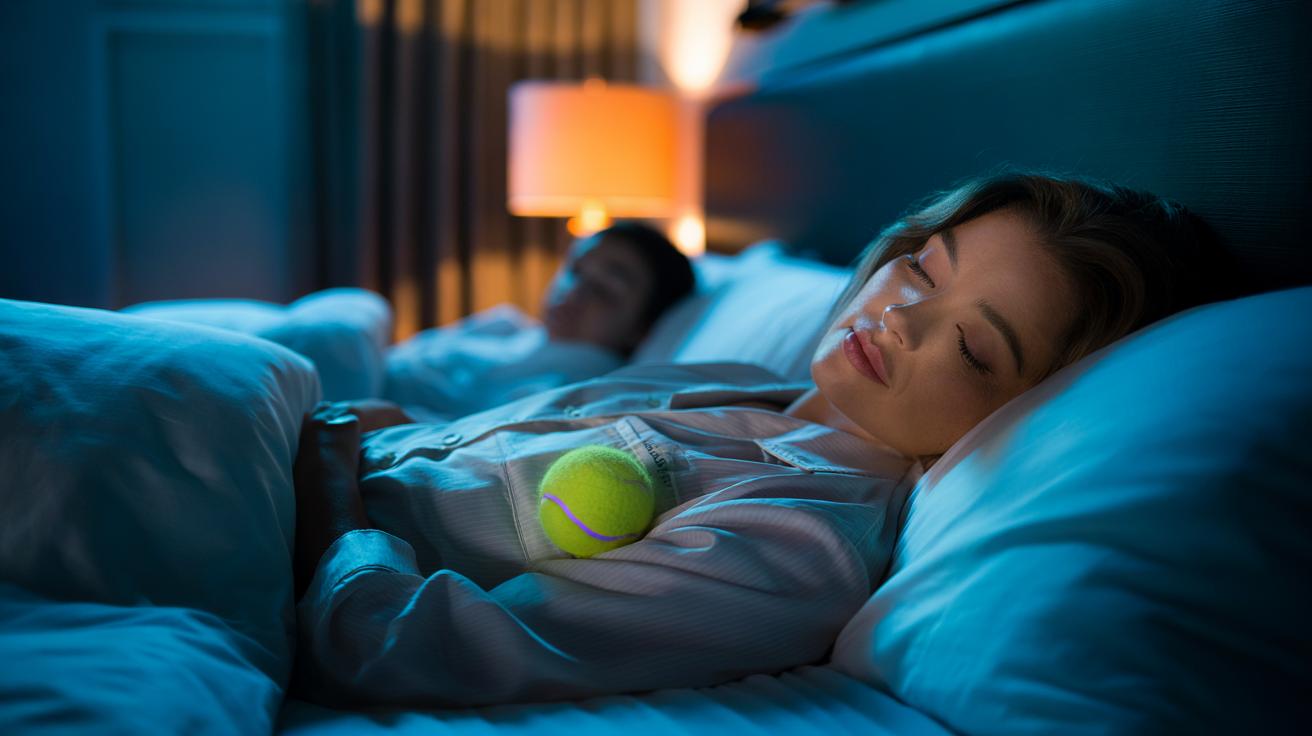
Here’s how it works. You sew, tape, or slide a tennis ball into a soft pouch attached to the back of your pyjama top. When you roll onto your back during the night, the ball makes the position subtly uncomfortable, nudging you to settle on your side. No buzzing alarms. No bedmate elbow diplomacy. Just a gentle, physical reminder. This hack is a form of positional therapy, a strategy aimed at people whose snoring or apnoea worsens when supine. The goal isn’t punishment. It’s guidance, delivered by a humble object that’s hard to ignore.
Why a tennis ball? It’s durable, washable, and just the right size to influence posture without digging into the spine. For many, the change is immediate. Less racket in the night. Fewer awakenings. Improved sleep continuity. It’s a pocket-sized nudge that can quiet a whole household and, for some, restore morning clarity that felt permanently lost. Crucially, it doesn’t replace medical care; it complements it. If snoring stems from back sleeping, the ball offers a low-risk, low-cost test: change position, change the night.
Why Changing Position Changes Sleep
Sleeping on your back invites gravity to do its worst. The tongue and soft palate drift backwards, narrowing the airway like a garden hose with a foot on it. In people with positional OSA, this narrowing collapses the airway repeatedly, causing dips in oxygen and micro-arousals that shred sleep architecture. Side-sleeping helps keep the airway open, often easing snoring and reducing apnoeic events. For the right sleeper, simply avoiding the supine position can transform a night from fractured to fluid. There’s a gastrointestinal angle, too: lying on the left can temper acid reflux, another frequent disrupter of slumber, while right-sided or back sleeping may invite splashback and coughing.
Position also influences the mechanics of breathing and the stability of REM sleep. In REM, muscle tone dips, the airway is more vulnerable, and even small anatomical quirks can have outsized effects. A tennis ball doesn’t cure a deviated septum or weight-related airway narrowing, but it can keep you out of the riskiest arena long enough for the night to settle. The result is often better sleep efficiency—more actual sleep within time in bed—and fewer bleary-eyed mornings. Think of it as a small adjustment with system-wide consequences.
How to Try It Safely and Sensibly
Start with a soft cotton T‑shirt and a small pocket. Stitch or stick the pocket between the shoulder blades and pop in a tennis ball. Too pokey? Wrap the ball in a thin sock. If you prefer no sewing, a running belt worn backwards works surprisingly well. Begin with short trials—two or three nights a week—so your shoulders and hips acclimatise. Pair the hack with good sleep hygiene: dim light in the evening, a cool room, and a consistent wake time. The trick is comfort that guides, not discomfort that wakes you up. If you experience pain, numbness, or skin irritation, stop and reconsider your setup.
| Who might benefit | People whose snoring or mild positional OSA worsens on their back |
|---|---|
| Pros | Very low cost, no drugs, compatible with most routines |
| Cons | Possible shoulder discomfort, adherence can fade, not a cure for moderate–severe OSA |
| Cost | £1–£5 for a ball; DIY pocket or belt you already own |
| Alternatives | Purpose-made positional belts, side-sleeping pillows, CPAP for diagnosed OSA |
Safety matters. Avoid this hack in late pregnancy, significant shoulder pain, or if you’ve been advised to sleep upright. Suspect OSA if you wake choking, daytime sleepiness is severe, or a partner observes pauses in breathing; seek a formal assessment. The tennis ball is a screening tool of sorts, not a substitute for evidence-based care.
What the Science Says and What It Doesn’t
Clinical studies on positional therapy show a consistent trend: keeping people off their backs reduces time spent supine, lowers snoring intensity, and can cut the frequency of breathing pauses in positional OSA. Randomised trials and meta-analyses report improvements in apnoea–hypopnoea index and sleep quality, particularly in those whose events are predominantly back-related. For mild, position-dependent cases, a simple posture prompt often outperforms doing nothing and may rival fancier devices in the short term. The catch is adherence. Some sleepers abandon the approach after weeks because of discomfort or novelty fatigue. Human behaviour is the hardest variable.
Limitations matter. The tennis ball won’t fix moderate to severe OSA, anatomical obstruction, or significant nasal disease. It can’t manage oxygen drops the way CPAP can, nor does it replace weight management or alcohol timing. Evidence favours its use as part of a multi-pronged strategy: side-sleeping, nose-friendly environments, caffeine discipline, and, when indicated, medical therapy. Still, the cost–benefit is striking. For pennies, you can test whether posture is the linchpin of your nights—data you can bring to a clinician to shape next steps.
Sometimes the smartest solution is also the strangest. A tennis ball, stitched into a top or tucked into a belt, reframes sleep without apps, subscriptions, or side effects that linger into the morning. If back-sleeping is your undoing, this small intervention can be the difference between a rasping night and a restorative one. Think of it as a diagnostic nudge and a behavioural cue rolled into one. Will you give the oddest item in your kit drawer a chance to reclaim the quiet, continuous sleep you’ve been missing—and what might you discover about your nights if you do?
Did you like it?4.4/5 (29)