In a nutshell
- 🌿 Create a closed-loop microclimate that recycles moisture via evaporation–condensation, meaning you add no water after setup; use bright, indirect light and steady temperatures.
- 🧰 Set up a sealed glass container with pebbles, activated charcoal, and coir/bark; plant nursery-fresh specimens already holding moisture, then seal and aim for a light morning condensation that clears by midday.
- 🌱 Choose vapour-loving species: Tillandsia, Fittonia, Selaginella, and mosses; avoid succulents and cacti; prefer small, slow growers to stabilise humidity and reduce maintenance.
- 🔍 Monitor internal “weather”: persistent fog = too wet; crisp tips = too dry; adjust seal, light, or brief ventilation; keep glass clean, prune lightly, and skip early fertiliser to prevent salt buildup.
- 🌍 Act ethically and sustainably: buy nursery-propagated plants, use peat-free media, repurpose jars, position away from radiators/draughts, and practice minimal intervention with notes to track tiny tweaks.
“No watering” sounds like mischief. Yet under glass and with the right species, houseplants can luxuriate indoors while you never lift a watering can. The trick is to exploit humidity, condensation and the plant’s own physiology, creating a closed-loop microclimate that recycles every molecule. It looks like magic. It isn’t. It’s physics and botany in a bell jar. You won’t pour a single drop, but leaves will still glisten, new fronds will unfurl, roots will drink vapour. This uncommon approach is perfect for space-starved flats, forgetful carers, or anyone keen on low-input, high-reward indoor greenery that tells a story of science at work on the windowsill.
What ‘No Water’ Really Means Indoors
Plants cannot live without water, but they don’t demand a jug of it. Many absorb moisture as water vapour across leaf surfaces and aerial roots, provided the air sits in a humid, stable pocket. In a sealed or near-sealed vessel, transpiration from leaves rises, condenses on cool glass, and returns as a fine film to the substrate and stems. That cycling turns yesterday’s vapour into tomorrow’s sip. The phrase “without a drop of water” here means you add none after setup; the system relies on the moisture already present in the plant and its medium and on ambient humidity captured and recirculated. Choose species evolved for cloud forest or canopy life—mosses, ferns, and air plants. They are adapted to drink mist and dew, not puddles. Keep light bright but indirect to power transpiration without cooking the container. A steady room temperature supports balance; dramatic swings sabotage the delicate condensation rhythm.
Resist the urge to water. If the glass has a light, even fog most mornings that clears by afternoon, the internal weather is working. If it’s bone dry for days, tweak light or seal; if it’s streaming wet, ventilate briefly and reduce warmth.
Setting Up a Closed-Loop Humidity Habitat
Start with a clear jar, cloche, or repurposed glass storage container with a good seal. Rinse well. Add a thin layer of rinsed pebbles for drainage, a sprinkle of activated charcoal to inhibit odours, then a shallow cushion of sterile coir or fine bark. Importantly, use nursery plants whose medium already holds moisture—fresh Fittonia, Selaginella, a small fern, or a tuft of cushion moss. You introduce no liquid; the existing content provides the initial reservoir. Nestle the plant; avoid compressing roots. Seal. Place in bright, filtered light—not direct sun—so the daily warm–cool cycle drives evaporation–condensation without overheating.
Aim for a gentle daily pattern: a gloss of condensation at dawn, clearing by midday. If none appears, move slightly closer to light or choose a spot with subtle temperature changes between day and night. If rivulets run and drip, crack the seal for an hour, then close again. The goal is equilibrium, not drought or deluge. Dust the glass occasionally; compromised clarity reduces photosynthesis. Avoid fertiliser early on; tight containers amplify salts quickly. Prune sparingly to keep leaves from pressing hard against the glass, which can invite rot.
Species That Love Vapour, Not Puddles
The winners are plants that sip the air. Air plants (Tillandsia) possess trichomes—tiny scales that absorb moisture directly. Miniature ferns, mosses, and creeping clubmoss (Selaginella) relish constant humidity without waterlogging. Certain Peperomia and Fittonia cultivars perform reliably in closed glass, as do micro Begonia species with fine leaves. Avoid desert succulents and cacti; they want arid air and bright sun, the opposite of this scheme. Keep scale modest: small biomass stabilises faster and prevents runaway condensation. A mixed planting looks lush, but monocultures are easier to balance at first. Choose slow growers to avoid weekly surgery.
| Plant | Target RH | Light | Container Style |
|---|---|---|---|
| Tillandsia (air plant) | 60–80% | Bright, indirect | Cloche with small air gap |
| Fittonia (nerve plant) | 70–90% | Bright shade | Fully sealed jar |
| Selaginella | 80–95% | Low–medium | Sealed terrarium |
| Moss (cushion types) | 80–100% | Low–medium | Shallow lidded dish |
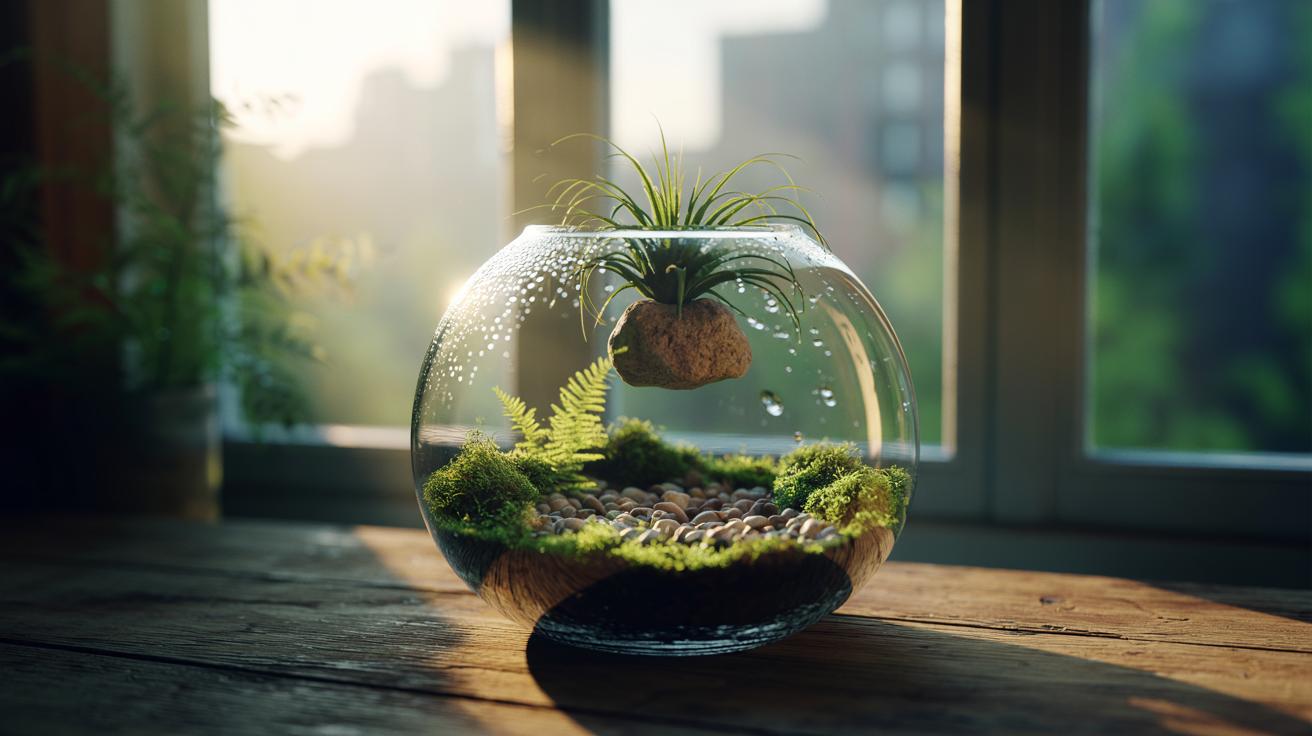
For air plants mounted under a cloche, secure them on cork above an inert layer of pebbles. Their own internal water and ambient vapour suffice. If they wrinkle, extend nighttime cover; that’s when many Tillandsia drink.
Monitoring, Troubleshooting, and Ethics
Watch for signals. Condensation that never clears means the system is too wet: reduce warmth, add airflow minutes, or downsize foliage. Crispy tips or leaf curl suggest too dry: improve the seal or shift to brighter, but still indirect, light to raise transpiration. A faint, earthy scent is normal; sour smells warn of anaerobic conditions—open briefly and remove decaying matter. Mould threads? Increase spacing between leaves and glass; charcoal and cleanliness help. Do as little as possible, as slowly as possible—these are microclimates, not aquariums for tinkering.
Source responsibly. Buy nursery-propagated Tillandsia and moss; avoid wild-collected specimens that strip habitats. Use peat-free media like coir. Reuse jars and food containers to cut waste. Place away from radiators and cold draughts to protect the daily humidity cycle. If you must intervene, favour minimally invasive moves: a brief airing, a trim, a change of position. Document with a notebook; small shifts teach you the language of your glass garden.
This “waterless” method swaps spouts and schedules for design and restraint. You set the stage, then let physics and plant metabolism do the daily labour. The result is quietly dramatic: a living weather system that feeds itself, asks little, and rewards patience with improbable vigour. It’s science you can see, a pocket rainforest tuned to the pulse of your room. What would you put under glass—a single sculptural air plant, a carpet of moss, or a jewel-box fern—if you knew you’d never need to pour a drop?
Did you like it?4.4/5 (29)