In a nutshell
- 🧻 The toilet roll tube hack makes sofa arms unstable and unrewarding, steering cats to a better texture nearby—often delivering results in one night.
- 🧠 Understand the “why”: cats scratch to stretch and mark with scent glands; offer a more satisfying target like corrugated cardboard or sisal instead of punishment.
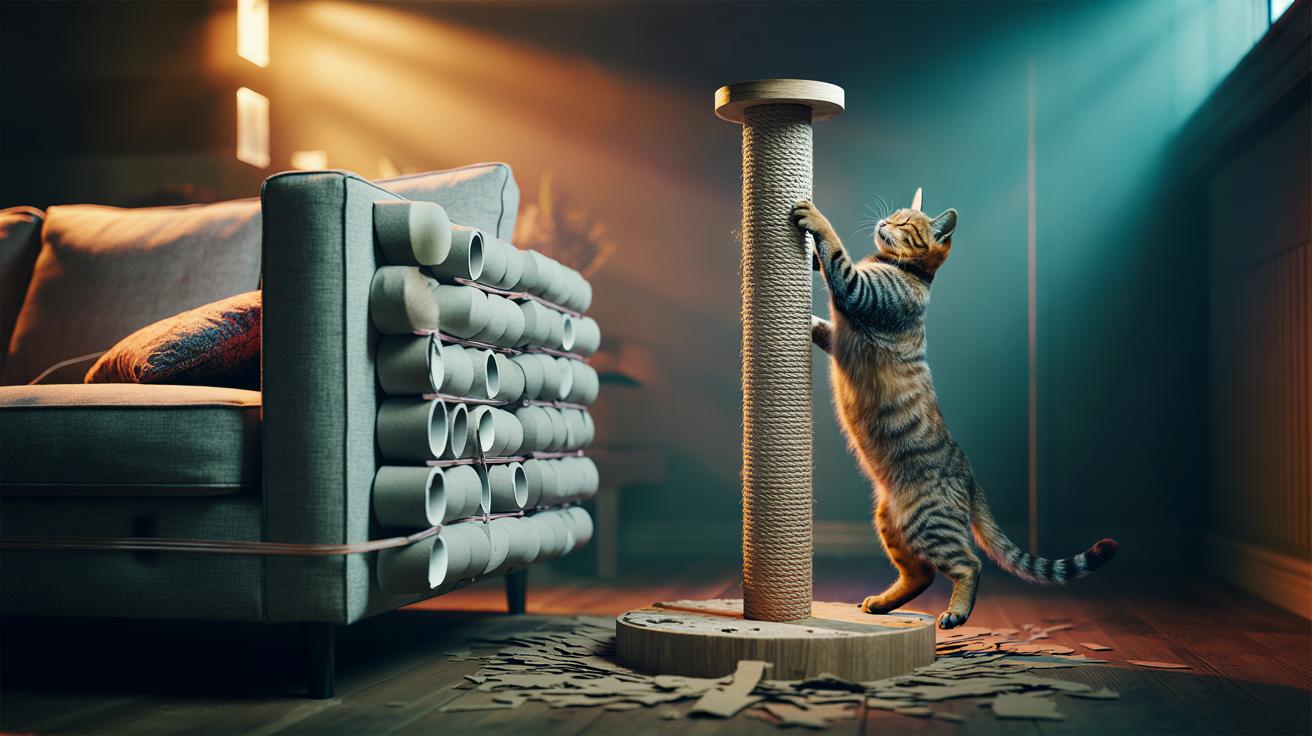
- 🛠️ Quick build: cut and shingle tubes into a guard, secure with elastics, then craft an enriched lure mat with catnip or silvervine beside a sturdy scratching post—a simple, step-by-step setup.
- ⏱️ The one-night plan: smart placement at dusk, close proximity of the “yes” surface, and immediate rewards for first scratches; keep the guard on for a week, then taper.
- 🐾 Troubleshooting: match vertical/horizontal preferences, add light citrus on the guard, use tube collars for sofa legs—ethical redirection in a country where declawing is illegal in the UK.
Cat owners know the dread: that first rasp of claws on a beloved sofa. You’ve tried sprays, scolding, even moving furniture. Yet the scratching continues. Here’s the good news. A simple, almost laughably cheap fix can halt the habit fast. The toilet roll tube hack uses cardboard sleeves and a smart bit of positioning to make your couch instantly less appealing while giving your cat a better, more rewarding place to scratch. It’s humane, quick, and many owners report change within one night. Below is how and why it works, with a step-by-step build, training cues, and tweaks for tricky cases.
Why Cats Scratch: The Science and the Opportunity
Cats don’t scratch to be naughty; they scratch to communicate. Claws leave both visible marks and a chemical message from scent glands in their paws. Scratching also stretches shoulder and back muscles, which is why the first target is often the vertical edge of a sofa. Understanding this explains why punishment never works. Replace “don’t scratch here” with “do scratch there—and love it”.
The ideal alternative must be more satisfying than your furniture. Texture matters. Many cats adore corrugated cardboard or sisal, which offer a deep, shreddy bite. Height matters too. A post should be tall enough for a full-body stretch. But there’s a second lever you can pull tonight: make the sofa surface briefly awkward and unrewarding. The toilet roll tube sleeves create wobble and drag without fear or pain, nudging your cat to the “yes” spot an inch away. Because cats are efficient decision-makers, they’ll switch quickly if the alternative feels better and the former target suddenly isn’t.
How to Build the Toilet Roll Tube Guard in 10 Minutes
Save 8–12 empty toilet roll tubes. Take scissors and cut each tube lengthways to create flat pieces. Overlap the pieces like shingles and tape them together on the underside with low-odour paper tape, forming a flexible mat about the size of your sofa arm or the area your cat targets. Wrap the mat around the arm, textured side out. Secure it gently with elastic bands or ribbon so it grips but doesn’t compress the upholstery.
Now craft a “magnet” scratch zone. Make a second mat, but this time rough it up: score light grooves with a butter knife and rub in catnip or silvervine. Place this enriched mat immediately adjacent to the protected arm, or cable-tie it to a sturdy scratching post. Key: the “yes” surface must sit closer and feel better than the “no” surface. For cautious cats, mist a feline pheromone diffuser nearby (brand-neutral) and add a treat trail leading to the new texture. Most cats will trial-scratch in minutes. Many will adopt it overnight.
| Item | Purpose | Tip |
|---|---|---|
| Toilet roll tubes | Protective sleeve and lure mat | Flatten for wraps; leave some round for extra wobble |
| Paper tape/elastics | Gentle, removable fixing | Choose low-odour, fabric-safe options |
| Catnip or silvervine | Positive attraction | Refresh every 48–72 hours |
| Scratching post | Permanent alternative | At least shoulder-height; heavy base |
The One-Night Plan: Placement, Timing, and Rewards
Evening is your golden window. Cats ramp up activity at dusk, exactly when those furniture assaults begin. Set the tube guard on the sofa arm your cat targets most. Put the enriched cardboard mat or tall post right beside it—no more than a paw’s distance away, slightly angled to invite a stretch. Proximity wins; don’t hide the post across the room.
Prime the new surface with a quick sprinkle of catnip and a slow drag of a feather toy up the post to trigger an instinctive reach-and-claw. The moment your cat makes contact, mark with a cheerful “Good!” and deliver a tiny treat. Two or three successes is enough. Overnight, the wobble and drag of the tube guard make the sofa unsatisfying. Come morning, you’ll often see shredded cardboard confetti in the “yes” spot—a victory sign. Keep rewards handy for the next 48 hours, then taper. Maintain the guard for a week, removing it for short supervised windows to test the habit shift.
Troubleshooting and Clever Variations
If your cat ignores the setup, diagnose preference. Some cats are vertical scratchers; others prefer horizontal platforms. Convert a few toilet roll sleeves into a flat “carpet” scratcher by stacking and gluing them in honeycomb rows. Place it where your cat naps—scratching often follows waking. If your feline aims at carpet edges, create a low-profile tube mat and tape it beneath a stair tread runner so the alternative sits right on the route.
Scent tweaks help. Rub a tiny bit of your cat’s cheek scent onto the “yes” mat by petting their face and transferring it—this familiar odour signals ownership. For the “no” zone, try a light spritz of a fabric-safe citrus hydrosol on the tube guard, never on bare upholstery. Never punish or shout—fear fuels stealth scratching. For sofa legs, slip whole tubes over the first few inches to create harmless wobble collars. Kittens take to this instantly; seniors may need lower, softer targets. In the UK, where declawing is illegal (rightly so), this humane combo of deterrence and redirection is both ethical and effective.
In a world of pricey pet gadgets, it’s oddly satisfying that a pile of cardboard sleeves can outsmart a determined scratcher. The toilet roll tube hack works because it respects feline instincts, changes the texture story at the sofa, and makes the alternative irresistible. Keep the guard on for a week, refresh the catnip, then slowly wean off once the new habit sticks. If you try it tonight, photograph your setup and the morning confetti—proof your cat has switched teams. What tweaks will you add to adapt this trick to your home and your cat’s unique scratching style?
Did you like it?4.5/5 (28)