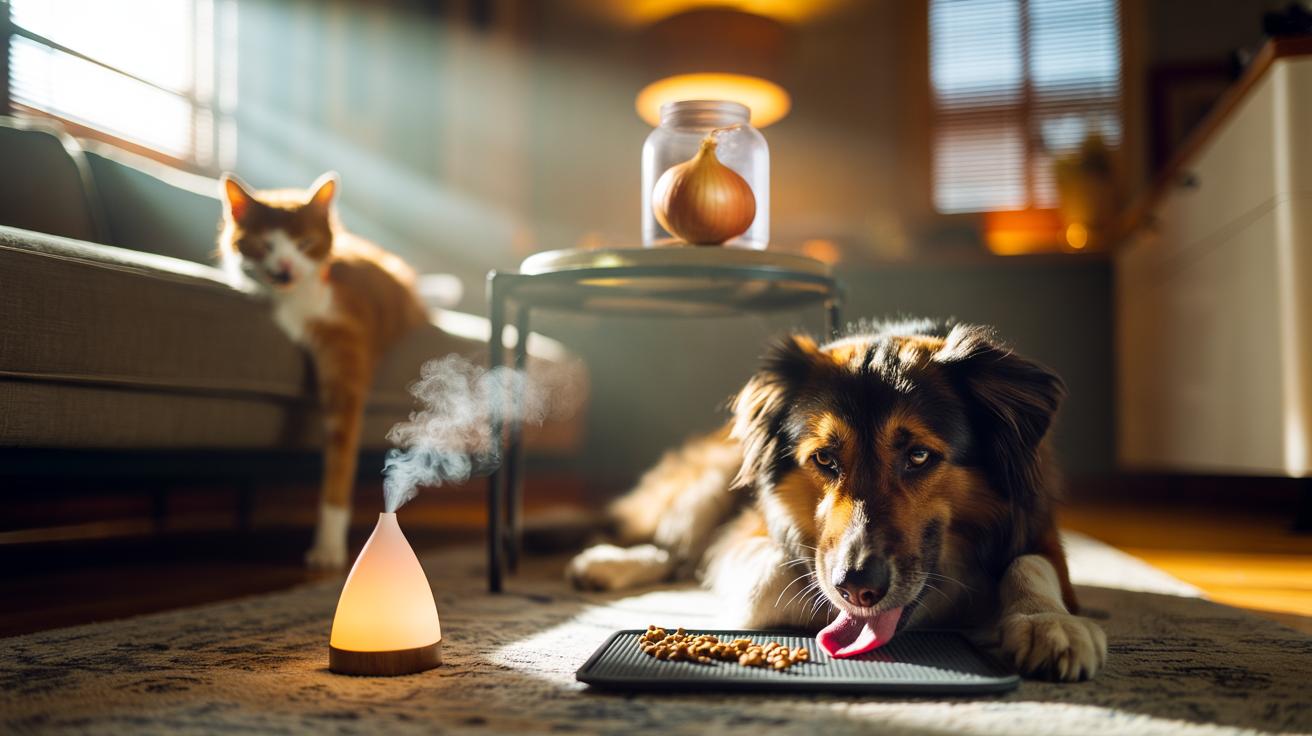
In a nutshell
- ⚠️ Onion aroma does not calm pets; it’s an aversive irritant that can trigger trigeminal discomfort and, if ingested, cause haemolytic anaemia—silence may reflect a freeze response, not relaxation.
- 🧪 The Allium family’s organosulfur compounds (e.g., thiosulfates) are toxic when eaten, and the pungent smell can overwhelm dogs’ and cats’ superior olfactory systems, making this “hack” unsafe.
- 📈 The viral “two-minute miracle” thrives on novelty and confirmation bias; videos conflate quiet with comfort and hide stress signals like lip-licking, crouching, or avoidance once the camera stops.
- 🧰 Safer, fast alternatives: scatter feeding/sniff games, licking mats, low-volume classical music/white noise, quick cues like “Find it,” and environment tweaks—blinds closed, chews offered, cardboard hides.
- 🐾 Choose evidence-based calming: consider pheromone diffusers/sprays (Adaptil, Feliway), supervise enrichment, and consult a vet or behaviourist if distress persists—avoid diffusing or wafting onion at all times.
The internet loves a “two-minute fix,” and few are more seductive than the claim that wafting an onion aroma can hush a barking dog or soothe an anxious cat almost instantly. It sounds thrifty. It sounds clever. It also sounds risky. As a UK journalist who covers evidence, not wishful thinking, I set out to examine the viral tip spreading across feeds and group chats. I spoke with vets, behaviourists, and toxicologists, and reviewed what we know about animal olfaction and household hazards. Your kitchen onion is not a calming aid, and silence achieved this way may signal distress rather than relief. Here’s what the science suggests—and how to calm pets quickly without gambling with their health.
What Science Says About Onion Scent and Pet Calm
Dogs and cats map the world via scent, with olfactory systems far more sensitive than ours. The onion family (Allium) contains organosulfur compounds, including thiosulfates such as allyl propyl disulfide. When ingested, these can trigger oxidative damage to red blood cells, leading to haemolytic anaemia, weakness, and, in severe cases, collapse. That toxicity is well-documented. What about the smell alone? The pungent odour is a chemical irritant, activating the trigeminal nerve—the same pathway that makes your eyes water when chopping onions. For animals with far keener noses, the experience can be overwhelming, not soothing.
So where does the “calm” come from? Often, it’s not calm at all. A pet may pause, crouch, lick lips, or go still because the stimulus is aversive. Silence is easily misread as relaxation when it’s actually a freeze response or cautious avoidance. Do not diffuse, heat, or intentionally waft onion aromas around animals—odour-level exposure can still be distressing, and ingestion is outright dangerous, especially for cats. If your goal is a quieter home in two minutes, evidence-backed routines beat irritants every time.
Why the Two-Minute Miracle Goes Viral
Short videos reward fast before-and-afters. A dog barks, a bulb appears on camera, the room goes quiet. Magical. Except it isn’t. We conflate silence with serenity because it’s easy to see and quick to film. The psychology is familiar: novelty bias, confirmation bias, and a desire to share “secret hacks” that confer social credit. Clips rarely show the moments after the camera stops—lip-licking, yawning, or a cat bolting under the bed. Nor do they show a pet returning to vocalising once the smell dissipates or the discomfort lifts.
There’s also the power of ritual. Owners who try a trick often change other variables at once—tone of voice softens, posture lowers, attention shifts from the window to the dog. The pet responds to those cues, not the onion. Silence achieved through startle or aversion is not welfare-friendly training; it’s a communication breakdown. We can do better than viral shortcuts by recognising what barking or meowing communicates: unmet needs, arousal, or uncertainty. Address the cause, and the quiet lasts longer than a trending soundbite.
Safer, Evidence-Backed Ways to Soothe Your Pet
If two minutes is all you’ve got, choose methods rooted in behaviour science and low risk. For dogs, activate the nose with a rapid “scatter feed”—toss a handful of kibble over a small area. Sniffing lowers arousal and redirects energy almost immediately. For cats, try a food puzzle or simple treat trail leading to a resting spot. Licking also helps; a mat spread with a thin layer of xylitol-free peanut butter (dogs) or a smear of wet food (cats) can settle pacey minds. Sound can support this: gentle classical music or broadband white noise at low volume masks triggers and promotes rest.
Environmental tweaks are fast wins: close blinds, move away from the window, offer a chew, provide a cardboard hide. For many households, pheromone diffusers (Adaptil for dogs, Feliway for cats) reduce baseline tension over days, with sprays offering quicker situational support. Training-wise, a simple “Find it” cue, a hand-target, or a one-minute sniff game buys calm without coercion. Replace folk remedies with humane routines that build trust, not startle responses.
| Method | Evidence/Effectiveness | Time to Calm | Risks |
|---|---|---|---|
| Scatter feeding / Sniff games | Behavioural science supports sniffing as self-soothing | 1–3 minutes | Low; manage food sensitivities |
| Licking mat / Chew | Promotes rhythmic, calming behaviour | 2–5 minutes | Low; avoid xylitol, supervise chewing |
| Pheromone diffuser/spray | Multiple studies show reduced tension | Spray: minutes; Diffuser: days | Very low |
| Classical music / White noise | Research suggests modest calming effect | 2–10 minutes | Low; keep volume gentle |
| Onion aroma | No evidence of calming; aversive | Unpredictable | High if ingested; distressing by smell |
In the end, the promise to “unlock silence with onion aroma” mistakes quiet for comfort and swaps science for spectacle. Real calm comes from needs met, environments managed, and training built on trust. Next time your home erupts in barks or yowls, reach for enrichment, soothing sound, or a quick nose-led game—not the vegetable drawer. If distress persists, speak to your vet or a qualified behaviourist; medical pain and anxiety disorders are treatable. What two-minute, pet-safe routine will you try tonight to turn down the volume while lifting your animal’s welfare?
Did you like it?4.4/5 (27)