In a nutshell
- ✈️ Committed to carry-on only with a structured underseat bag sized 40 × 20 × 25 cm, staying within Ryanair’s free allowance and avoiding upsells.
- 🧳 Used a three-cube vertical compression stack plus “wearable capacity” (jacket pockets) to keep the bag sizer-ready and gate-proof for trips up to a week.
- 🧥 Built a two-colour capsule wardrobe with merino T-shirts, one pair of compact trainers, and a packable down jacket; switched to solid toiletries to minimise liquids.
- 💷 Tracked avoided add-ons—Priority & 2 Cabin Bags, 10 kg and 20 kg options, and gate penalties—totalling an estimated £380 saved across four return trips.
- ✅ Operational habits: measure gear at home, rehearse the sizer, place liquids/tech on top for security, and carry a foldable tote for destination overflow.
Last year I flew lean, fast, and unapologetically light. No checked bags. No priority boarding upsells. Just one carry-on that met Ryanair’s free allowance. The result? I kept £380 in my pocket instead of handing it over in fees. The “trick” wasn’t a gimmick, but a disciplined system: the right underseat bag, a capsule wardrobe, and a stacking method that turns air into space. I tested it across weekend hops to Dublin, a week in Valencia, and a splash-and-dash to Gdańsk. Different climates, same bag. The best part is that it’s perfectly legit, calm at the gate, and oddly liberating once you lock it in.
The One-Bag Formula That Meets Ryanair’s Free Allowance
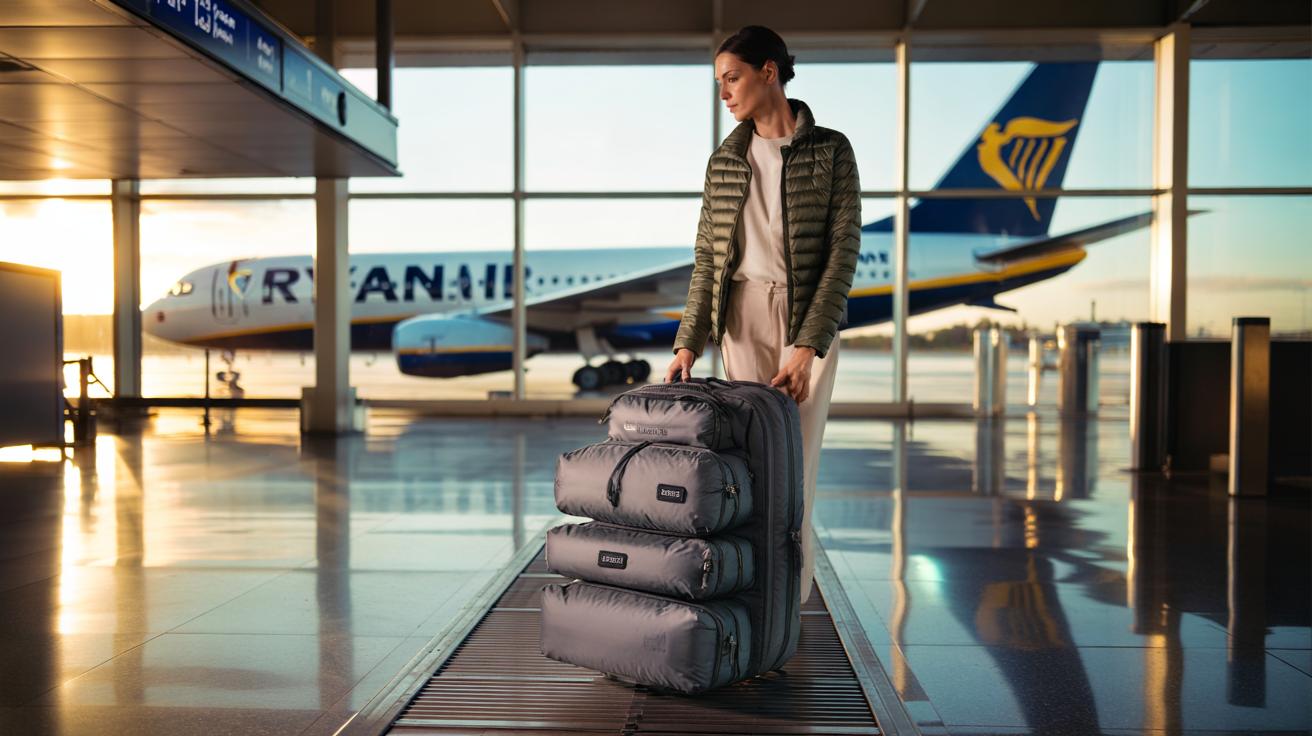
I started by choosing a structured underseat backpack built exactly to 40 x 20 x 25 cm. Hard numbers, not vibes. A rigid frame or boxy silhouette protects the volume, while top-loading access stops the classic “airport rummage”. I never exceeded Ryanair’s free 40 x 20 x 25 cm allowance, and I never needed to pay for Priority & 2 Cabin Bags. That one commitment eliminated the upsell carousel from the moment I hit “book”.
Clothes were curated into a two-colour capsule. Lightweight stretch chinos, one pair of compact trainers, merino T-shirts that don’t shout “travel gear” yet resist odour, and a packable down jacket I wore onto the plane. The jacket pockets carried gloves, a hat, and my cable pouch, so the bag stayed sleek. Small things matter: a flat, soft sunglasses case; a micro umbrella; a paper-thin tote for groceries at the destination.
Liquids were ruthless. I swapped to solid toiletries for shampoo, conditioner, and deodorant. The only liquids left: a 50 ml sunscreen and a mini moisturiser, dropped into the airport-compliant bag on top for instant security access. If an item didn’t earn its place twice—wearable and mixable—it didn’t come. The result was a calm, gate-ready profile that looked tidy and fit the sizer without acrobatics.
The Packing Trick: Three-Cube Stack And Wearable Capacity
The engine of this method is a vertical compression cube stack. Three cubes, nothing more. Bottom cube: underwear, socks, swim shorts, and sleepwear rolled tight; socks nested inside the packed trainers to reclaim dead space. Middle cube: T-shirts and a light knit, folded Marie-Kondo style so edges stay square. Top cube: trousers, shirt, and a packable tote. Each cube compresses with a secondary zip. The bag becomes a tidy brick that can slip into the sizer with zero force.
Tech lived in a slim sleeve against the back: Kindle instead of hardbacks, a tiny 20W charger, one short USB-C cable, and wired earbuds. Boarding passes and passport sat in a thin document wallet at the front. Everything I needed for seven days fit into a bag the size of a shoebox, with room for a sandwich and a magazine. The hidden edge? A travel weight scale and a ruler at home. I measured once, packed forever.
At the airport, I wore my heavier layers and unzipped the jacket pockets only after boarding. That isn’t sneaky; it’s just comfortable. Toiletries and electronics were placed on top for rapid removal at security. I rehearsed the sizer at home with the bag fully packed. If I needed to bring back food or a souvenir, the folded tote handled overflow at destination, while I ate or wore the extra space by return. No drama, no last-minute gate charges.
Receipts, Fees, And The Real £380 Saved
Ryanair fees vary wildly by route and timing, but the pattern is consistent: paying for Priority & 2 Cabin Bags or a 10 kg/20 kg bag adds up fast. By committing to the free personal item only, I avoided those line items on four return trips. I tracked every booking and gate price to understand the real saving. Across the year, the trick saved me £380 in fees, not counting time saved at baggage belts.
| Trip (2024) | Optional Fee Avoided | Typical Fee Range | What I Did | Saved |
|---|---|---|---|---|
| London–Dublin (return) | Priority & 2 Cabin Bags | £18–£32 each way | Stayed within 40×20×25 cm | ~£60 |
| Manchester–Valencia (return) | 10 kg Cabin Bag add-on | £14–£38 each way | Three-cube stack, wore jacket | ~£70 |
| Edinburgh–Gdańsk (return) | 20 kg Checked Bag | £24–£59 each way | Capsule wardrobe, solids | ~£120 |
| Stansted–Porto (return) | Gate Bag Fee risk | £45–£69 at gate | Sizer rehearsal at home | ~£130 |
The exact figures fluctuate, but the principle holds: the smallest legal bag, fully optimised, neutralises the upsell. My spreadsheet totalled £380 saved across those trips. No arguments with gate staff. No last-minute repacking rituals. When your kit is precise, airline pricing stops being a trap and becomes a game you’ve already won. That’s the quiet confidence of travelling light—and paying nothing extra for the privilege.
Could I have packed even less? Possibly, though I never felt deprived. I ate well, dressed normally, and walked off every flight straight into the day. The trick wasn’t heroics; it was design. A compliant bag, a cube system, fabrics that work hard, and a commitment to avoid bloat. For 2025, I’m refining the wardrobe with one smarter mid-layer and a lighter shoe. What destination would challenge your one-bag discipline enough to try this—and what would you leave behind to make it happen?
Did you like it?4.4/5 (30)