In a nutshell
- ⚡ The science: friction lifts fibres while static electricity is neutralised by cationic surfactants in dryer sheets, reducing cling and redirecting hair onto the sheet.
- 🚀 Why it’s fast: antistatic agents lower surface energy, short strokes against the nap loosen fur, and long finishing passes collect it, making removal visibly quicker with each swipe.
- 🛋️ Practical techniques: crumple the sheet for more contact points, work against the nap on upholstery, lightly dampen for winter static, and use gentle pressure on delicate knits and suits.
- ♻️ Sustainability and safety: choose unscented formulas, never use on pets, reuse “spent” sheets from the dryer, and rotate in reusable alternatives like microfiber cloths or rubber gloves.
- 🧰 Tool matchups: dryer sheets for quick clothing touch-ups, microfiber for sofas and floors, and rubber squeegees for heavy piles—each balances effort, residue, and effectiveness.
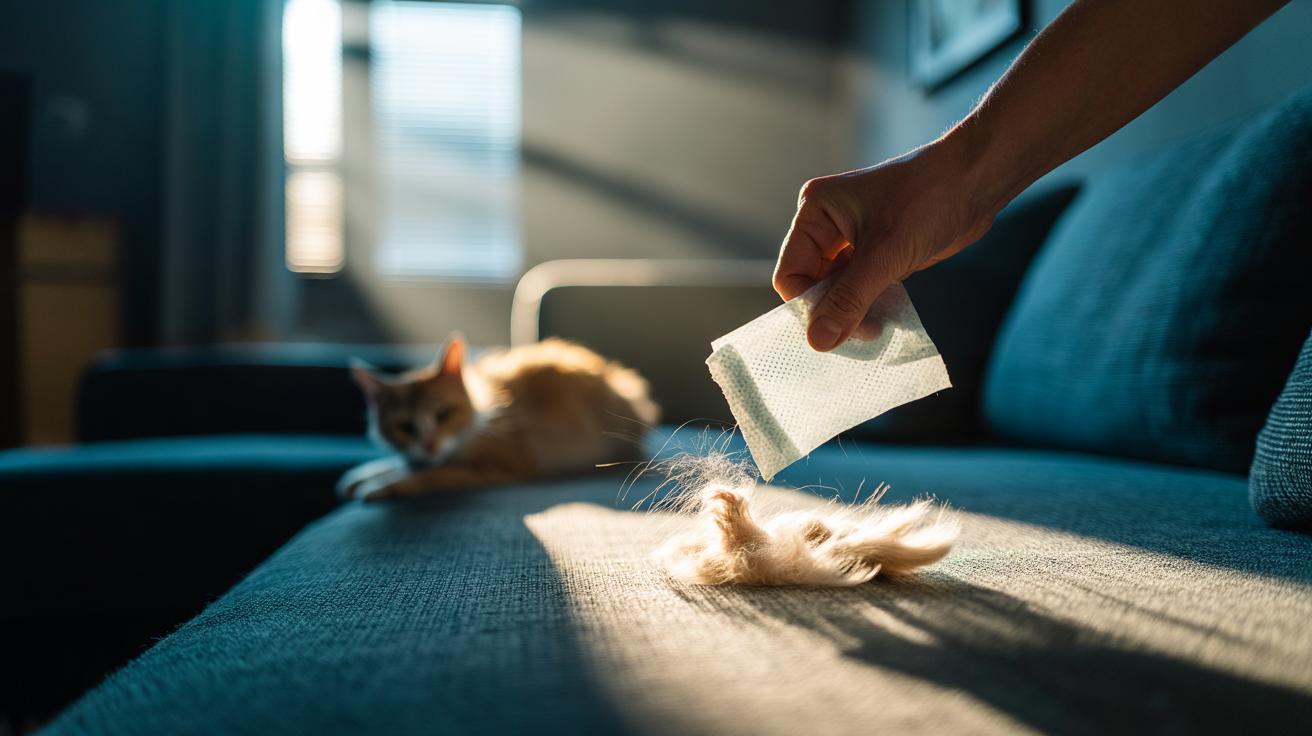
Britain loves pets, less so the fluff they leave behind. When jumpers look furry and sofas grow a second coat, a humble laundry staple steps up: the dryer sheet. With a quick swipe, it seems to make hair vanish, as if by sorcery. It isn’t magic. It’s friction and static, tamed by chemistry. The result is rapid lift-off with minimal elbow grease. In seconds, clinging fur loosens, migrates, and sticks to the sheet, not your outfit. Below, we unpack the science, share techniques that actually work in busy homes, and weigh sustainability concerns so you can choose the smartest, safest approach.
The Science of Friction and Static
Pet hair sticks because of static electricity and micro-fibres acting like tiny hooks. Rubbing fabrics against each other shuffles electrons, building charge in line with the triboelectric series. Hair and synthetic textiles often sit far apart on that series, so after friction, one surface goes slightly positive, the other negative. Opposites attract. That’s your fluff problem. Dryer sheets alter this equation. They are coated with cationic surfactants—often quaternary ammonium compounds—plus lubricants that reduce friction. When you rub a sheet over a surface, those molecules transfer, lowering charge and smoothing fibre surfaces.
The key is controlling static while retaining just enough grip to lift debris. The sheet’s gentle, waxy film cuts the cling between fabric and fur, encouraging loose hair to release. Meanwhile, mild tack and altered surface energy give the hair a new home: the sheet itself. Temperature and humidity matter too. Slightly humid air dissipates charge faster, which is why a lightly dampened dryer sheet can outperform a dry one on crisp winter days. The result is fast, visible removal without the lint-roller waste.
Why Dryer Sheets Grab Fur So Fast
Speed comes from a synergy of physics and chemistry. As you rub, mechanical friction agitates fibres and lifts hair from the textile’s weave. Simultaneously, the sheet deposits antistatic agents that neutralize charge differentials. Think of it as cutting the “Velcro” between hair and fabric while providing a gentle magnet elsewhere. Many sheets also include fatty acid esters that form an ultra-thin coating, changing the fabric’s surface energy. Lower surface energy means hair prefers to move away from the garment and onto the sheet. The effect compounds with each pass: less cling, more transfer, fewer strokes.
Another factor is directionality. Pet hair often aligns with the fabric nap. Short, brisk strokes against the nap pop fibres upright; long finishing strokes carry loosened hair into the sheet’s web. On carpets or car seats, the same rule applies. Crumpling the sheet increases contact points, improving pickup on textured materials. Do note residues: while minimal, they exist. Avoid polished wood, touchscreens, and optics. On delicate knits or dark wool, test discreetly to ensure no dulling or scent transfer. Used correctly, the process is fast, visible, and repeatable.
Practical Techniques for Sofas, Car Seats, and Clothes
For jumpers and coats, lay the garment flat. Crumple a dryer sheet into a loose ball to increase edges, then use short strokes to lift, long strokes to collect. Rotate the sheet as it loads with hair. A single sheet can handle a front and back pass on a medium jumper in under a minute. On suits, go lightly—pressure can flatten fibres; two featherlight passes beat one aggressive scrub. For fabrics prone to pilling, support the cloth with your opposite hand to prevent stretch.
Sofas and car seats need a different rhythm. Pre-vacuum crumbs to avoid pushing grit into the weave, then run the sheet against the nap to raise embedded hair. Follow with broad sweeps in one direction to gather into a neat line you can pinch away. Lightly dampen the sheet for stubborn areas; a misted sheet dissipates static quicker without soaking the fabric. For boot liners and rubber mats, the sheet’s antistatic effect reduces re-cling, keeping fuzz at bay between cleans. Tip: finish by brushing seams and piping, where hair accumulates invisibly and migrates back after you leave.
Sustainability and Safety: What to Know
Dryer sheets are convenient, but they’re single-use and often fragranced. If you have pets with sensitivities—or a nose that balks at synthetic scents—choose unscented, plant-based options. Never use dryer sheets directly on animals; they are for fabrics and furniture only. Wash hands after use, and avoid wiping food-contact surfaces. To reduce waste, keep a stash of “spent” sheets from the tumble dryer: even after a cycle, they retain enough antistatic power for quick spot-cleaning. Some households alternate with reusable tools to cut disposables dramatically.
Below is a quick comparison to help match tools to the mess:
| Method | How It Works | Best For | Pros | Cons |
|---|---|---|---|---|
| Dryer Sheet | Antistatic + light tack | Clothes, upholstery | Fast, low-effort | Single-use, scent residue |
| Microfiber Cloth | Electrostatic lift | Hard floors, sofas | Reusable, washable | Less instant on heavy fur |
| Rubber Squeegee/Glove | Friction gathers hair | Car mats, stairs | Excellent for piles | Needs more effort |
For a greener routine, rotate: quick dryer-sheet sweeps for clothing before you head out; microfiber or a rubber glove for deeper weekend cleans. Store sheets in a sealed pouch to preserve efficacy. If indoor air quality matters, pick low-VOC, hypoallergenic formulations. Ultimately, the best tool is the one you’ll actually use—quickly, consistently, without fuss.
Pet hair isn’t inevitable clutter; it’s a manageable by-product of shared lives. By harnessing friction, reducing static, and working with the fabric’s nap, a dryer sheet flips the physics so fur prefers the sheet, not your sofa. The method is swift, tactile, oddly satisfying. Small inputs, big returns, cleaner exits. Balance convenience with care: choose unscented when possible, reuse when practical, and reserve gentler techniques for delicate textiles. With those tweaks, you tame the fluff and keep your wardrobe newsreader-neat. What surface in your home most needs a friction-powered, antistatic rescue next?
Did you like it?4.6/5 (25)